Category:
Geopolitical AnalysisNavigating KMT-CCP Relations: A Geopolitical Insight
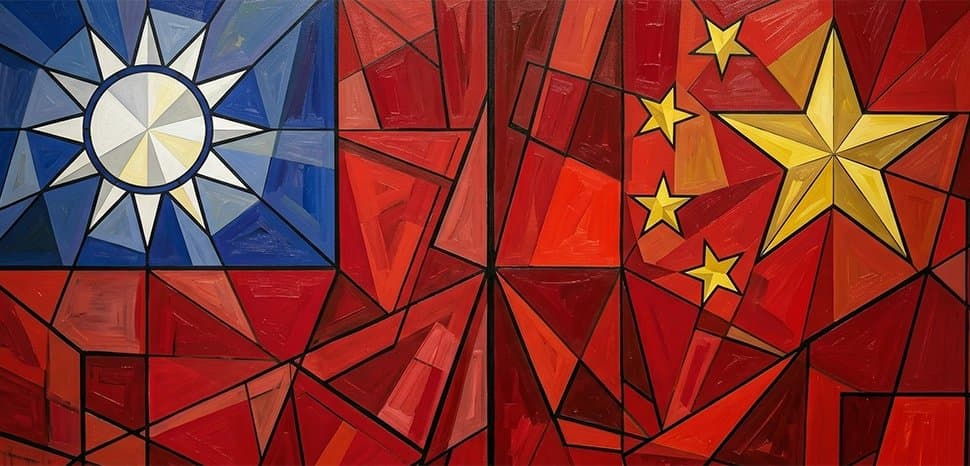
A Century-Long Dance Across the Strait 🌏
The relationship between Taiwan's Kuomintang (KMT) and China's Chinese Communist Party (CCP) has oscillated between tension and cooperation for over a century. This intricate dance reflects not only the political and ideological divides but also the socio-economic transformations that have defined the region. The 2026 Think Tank Forum in Beijing marked another chapter in this ongoing saga, emphasizing dialogue and cooperation, yet underscored by historical complexities.
From Civil War to Coexistence: A Historical Perspective 📜
To understand the present dynamics, we must revisit 1949 when the Republic of China (ROC) and the People's Republic of China (PRC) emerged from the aftermath of civil war. The ROC retreated to Taiwan, maintaining its constitutional framework, while the PRC established a new socialist regime on the mainland. This divergence set the stage for decades of political and military standoffs.
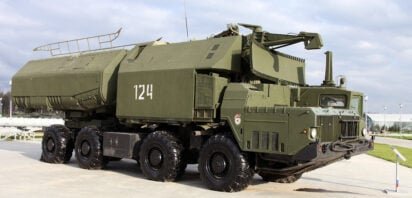
The early years were marked by military confrontations and ideological battles. Taiwan, under martial law, focused on economic recovery with U.S. support, while the mainland underwent land reforms and collectivization under the CCP's revolutionary zeal.
Institutional Divide: The Foundation of Modern Relations ⚖️
The political structures in Taiwan and China evolved in starkly different directions. Taiwan's transition to democracy in the late 20th century fostered a vibrant, competitive political environment. In contrast, the PRC reinforced its one-party rule, maintaining control over economic and social spheres.
This institutional divide is not merely political; it is constitutional and deeply rooted in the governance structures of both entities. Taiwan's sovereignty is expressed through its democratic processes, while China's governance is characterized by party supremacy and centralized control.
The Geopolitical Chessboard: Current Dynamics and Future Prospects ♟️
The 2026 Forum highlighted the strategic maneuvering typical of KMT-CCP interactions. Dialogue continues to be a tool for managing tensions without resolving underlying issues. The metaphor of winter passing into spring, used by Song Tao, symbolizes hope for reconciliation, yet the historical patterns suggest a more geological, slow-moving evolution.
Broader Implications: Regional and Global Context 🌐
The Taiwan Strait remains a flashpoint in international relations, affecting global trade, security, and diplomacy. The U.S. and its allies watch closely, balancing their commitments to Taiwan's security with broader geopolitical interests involving China.
Concluding Thoughts: Looking Ahead 🔍
As we look to the future, the KMT and CCP must navigate their complex history with an eye on regional stability and global impact. The enduring divide across the Taiwan Strait is a testament to both historical grievances and the potential for future cooperation.
Understanding this intricate relationship is crucial for stakeholders in geopolitical analysis, as it influences not only regional dynamics but also the broader international order. The path forward requires careful diplomacy, strategic foresight, and a willingness to engage in meaningful dialogue.
You May Also Like
Geopolitical Analysis
Iran Conflict: Global Economic and Political Reverberations
March 31, 2026
Geopolitical Analysis
How Multipolarity Alters Iran's Escalation Dynamics
March 30, 2026
Geopolitical Analysis
Global Alliances: The Decline and Its Implications
March 30, 2026
Geopolitical Analysis
Geopolitics Weekly: Greenland, US-Taiwan Deal, Syria
March 30, 2026