Category:
Geopolitical AnalysisMauritania's LNG Leap: West Africa's Energy Dynamics
Introduction 🌍
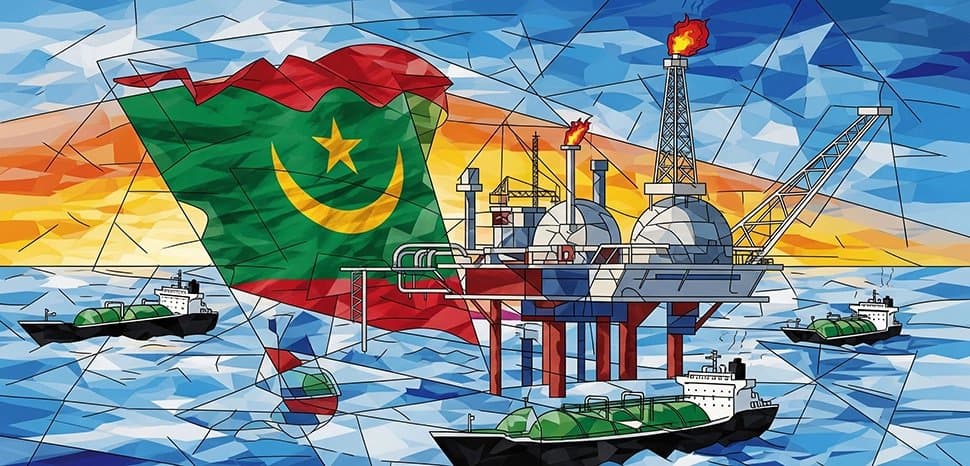
Mauritania's entry into the liquefied natural gas (LNG) market marks a significant milestone in the geoeconomic landscape of West Africa. As the Greater Tortue Ahmeyim (GTA) project begins production, the country stands at the forefront of a new era in energy production. This development is not merely a step in energy output but a strategic move that positions Mauritania as a key player in the global energy arena.
The Greater Tortue Ahmeyim Project 🚀
The GTA project, with its first gas flowing as of January 2025, symbolizes Mauritania's transition from an energy prospect to a producer. This venture, operated by BP in collaboration with partners such as Kosmos Energy, represents a substantial investment of approximately $4.8–$5 billion for its initial phase. By utilizing floating liquefaction technology, Mauritania and Senegal have bypassed the delays typical of onshore facilities, speeding up their entry into the global market.
Strategic Geoeconomic Implications 📈
Mauritania's foray into LNG isn't just about energy production; it's about strategic positioning in a changing global market. Unlike Nigeria, whose LNG output is significantly larger yet plagued with instability, Mauritania's strength lies in its strategic flexibility. With substantial offshore reserves and proximity to European markets, Mauritania can leverage its resources beyond mere volume.
Potential Economic Impact 💰
The economic implications for Mauritania are vast. Revenue from gas exports could potentially stabilize the country's finances, spur infrastructure development, and support electrification projects. However, these benefits come with risks. Dependence on volatile gas prices and the need for transparent governance are crucial to avoid the pitfalls of resource dependency.
Challenges and Opportunities 🔍
Europe's ongoing energy reconfiguration, driven by geopolitical shifts like the Ukraine conflict, presents both challenges and opportunities for Mauritania. While the demand for LNG is high, European markets are increasingly scrutinizing carbon emissions and methane leakage. Mauritania's ability to meet these stringent standards will determine its competitiveness.
The Role of BirAllah Field 🌊
Attention is also shifting towards the BirAllah field, which holds potential reserves far exceeding those of GTA. Its development could transform Mauritania from a joint venture partner to an autonomous energy power, enhancing its negotiating power in the global market.
Conclusion: Navigating the Future 🔮
Mauritania's entry into the LNG sector is more than an economic milestone; it is a test of strategic governance and market adaptability. The country's success will hinge on its ability to balance immediate economic gains with long-term sustainability and compliance with international standards. As Mauritania navigates this new landscape, its actions will undoubtedly shape the geoeconomic dynamics of West Africa.
In conclusion, the future for Mauritania in the LNG market is promising but fraught with challenges that require strategic foresight and rigorous governance. As the world watches, Mauritania's next moves will reveal whether it can sustain its newfound status in the global energy hierarchy.
You May Also Like
Geopolitical Analysis
The Ticking Clock in West Azerbaijan: A Geopolitical Analysis
March 30, 2026
Geopolitical Analysis
Indonesia's Role in Global Power Dynamics
March 30, 2026
Geopolitical Analysis
Caracas Falls: Geo-Political Shifts Explained
March 30, 2026
Geopolitical Analysis
The Trump Corollary: Gunboat Diplomacy Resurfaces
March 30, 2026