Category:
Geopolitical AnalysisIndonesia's Role in Global Power Dynamics
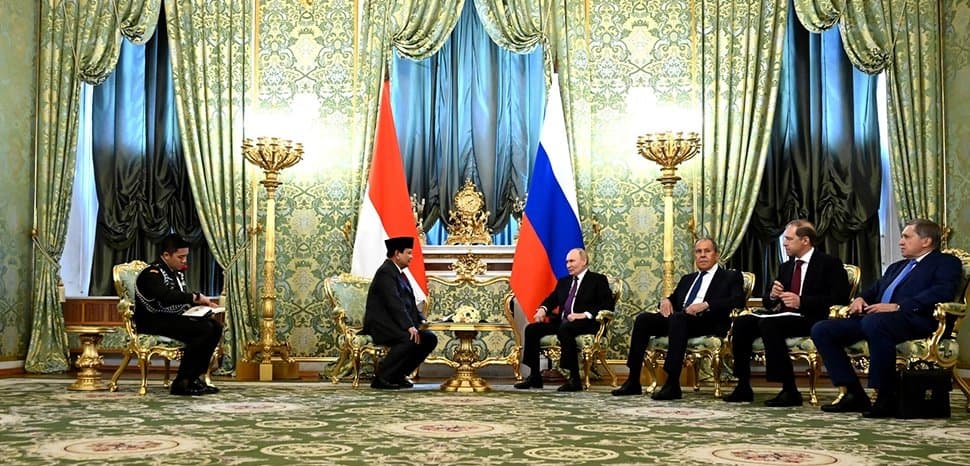
In the modern geopolitical landscape, Indonesia is emerging as a pivotal player in the intricate dance of great power competition. Situated strategically, the archipelago nation is navigating a complex web of international relations, balancing its interactions with global powerhouses like China, the United States, and Russia. 🇮🇩✨
Indonesia's Geostrategic Evolution
Under President Prabowo Subianto, Indonesia has shifted from a traditionally neutral stance to a more proactive foreign policy. Historically, Indonesia's free and active foreign policy aimed to keep the country insulated from geopolitical conflicts. Today, however, it embraces a strategy known as multi-alignment. This approach allows Indonesia to diversify its strategic partnerships without committing to formal alliances, maximizing its geopolitical maneuverability.

Navigating the US-China Rivalry
Indonesia's relationship with China is a key pillar of its foreign policy. China stands as Indonesia’s largest trading partner and a significant investor. Despite this economic interdependence, Indonesia remains firm in asserting its sovereignty, particularly concerning the contentious Natuna Islands and its Exclusive Economic Zone (EEZ). This delicate balance is crucial as it allows Indonesia to maintain stable relations with Beijing while protecting its territorial integrity.
The broader geopolitical chessboard is marked by the US-China rivalry. Indonesia's strategic ambiguity enables it to maintain autonomy, avoiding overt alignment with either power. This stance is evident in Indonesia's cautious yet cooperative engagement with China, as showcased during President Subianto's 2024 visit to Beijing, where discussions included joint development in contested maritime areas.
Russia's Strategic Interest in Indonesia
Indonesia's accession to BRICS in 2025 marks another significant development. The dynamics between Russia and Indonesia have garnered attention, especially with reports of Russia seeking military collaborations in Papua. Despite Indonesia's denial of such military base agreements, the growing defense cooperation signifies Russia's interest in enhancing its presence in Southeast Asia.
Indonesia's engagement with Russia includes joint naval exercises and strategic partnerships, underscoring a mutual interest in diversifying economic and defense ties. This relationship is further solidified by Indonesia signing a free trade agreement with the Eurasian Economic Union (EAEU) in December 2025, signaling a shift towards broader economic integration beyond traditional Western alliances.
Challenges and Opportunities
While Indonesia's multi-alignment strategy offers numerous opportunities, it also presents challenges. The ambiguity of its stance in the South China Sea, for instance, could lead to misinterpretations by other regional actors. Moreover, Indonesia's balancing act requires careful navigation to avoid alienating any major power, which could destabilize regional peace.
Key Takeaways
- Strategic Positioning: Indonesia's proactive foreign policy aims to place it at the center of global power interactions, leveraging its strategic location and economic potential.
- Balancing Act: Maintaining autonomy while engaging with China and Russia reflects Indonesia's nuanced approach to foreign policy.
- Economic Diversification: Through agreements like the EAEU, Indonesia seeks to broaden its economic horizons, reducing reliance on any single bloc.
In conclusion, Indonesia's geostrategic hospitality in the new era of great power competition is a testament to its evolving role on the global stage. As it continues to build robust relationships with major powers, Indonesia sets a precedent for other nations navigating similar geopolitical landscapes. 🌏💼
You May Also Like

Geopolitical Analysis
The Ticking Clock in West Azerbaijan: A Geopolitical Analysis
March 30, 2026
Geopolitical Analysis
Caracas Falls: Geo-Political Shifts Explained
March 30, 2026

Geopolitical Analysis
The Trump Corollary: Gunboat Diplomacy Resurfaces
March 30, 2026

Geopolitical Analysis
European Digital Sovereignty: A Defining Moment
March 30, 2026