Category:
Geopolitical AnalysisEurope's Payment Sovereignty & Wallet Risks
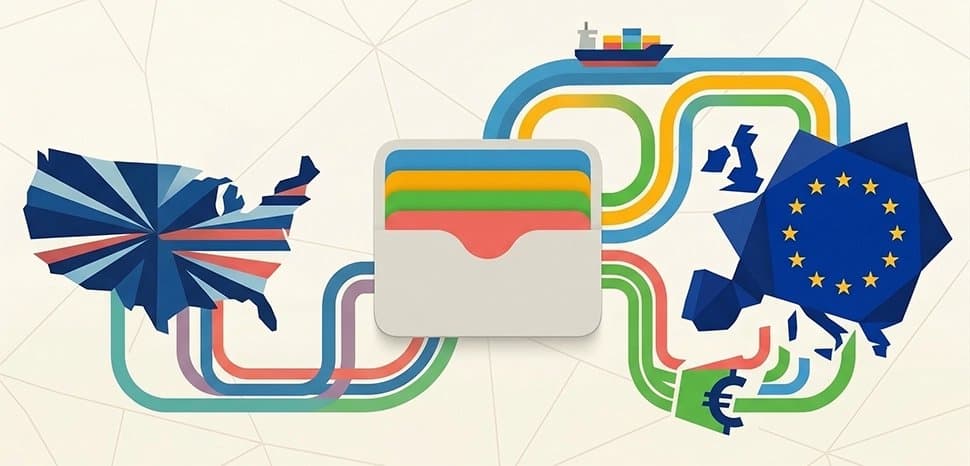
The Chokepoint of Payment Sovereignty in Europe
In an increasingly interconnected world, the control over payment systems has emerged as a pivotal concern for national sovereignty. This became starkly evident in March 2022, when Visa and Mastercard suspended operations in Russia, highlighting the intrinsic vulnerabilities tied to global payment networks. Such strategic dependencies have prompted Europe to reassess its own position in the global payment ecosystem.

The Geoeconomic Impact of Payment Networks 🌍
Payment cards might seem like routine financial tools, but they are crucial to retail commerce, e-commerce, and the liquidity of businesses and households. The reliance on non-European payment systems poses significant risks. For the euro area, where 13 countries depend entirely on international card schemes, this reliance can translate into strategic vulnerability.
In the euro area, approximately 61% of card payments are processed by international schemes. As Piero Cipollone of the European Central Bank noted, this dependency weakens Europe's payment autonomy, particularly as cash usage declines.
The Complex Layers of Payment Infrastructure
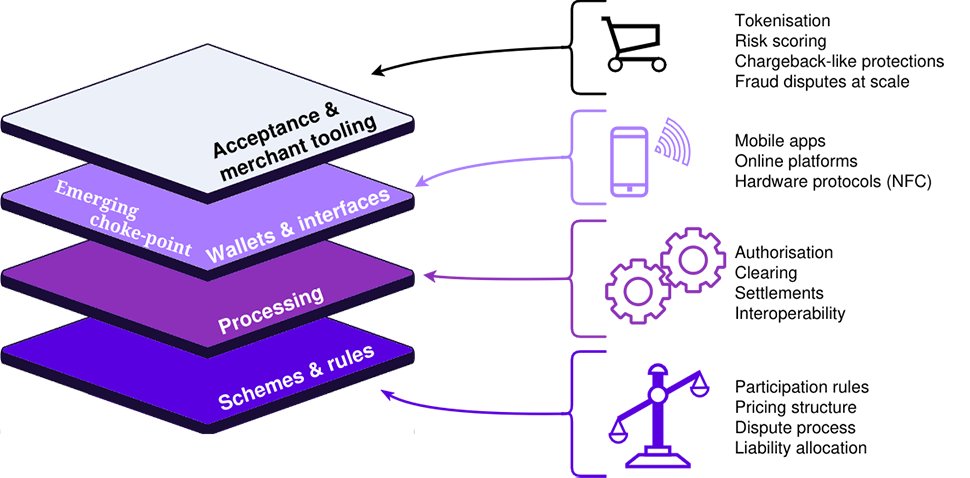
Europe's challenge isn't merely about replacing Visa or Mastercard. The payment ecosystem is a multilayered structure comprising schemes, processing systems, wallets, and merchant acceptance. Here's a breakdown:
- Schemes and Rules: These define who can participate in the payment network, how fees are structured, and how cross-border transactions are handled.
- Processing Services: Even with domestic card brands, many authorization processes occur outside of European jurisdiction, creating a distinct chokepoint.
- Wallets and Interfaces: Device operating systems and digital wallets dictate user experience, influencing payment choices and access.
- Merchant Acceptance: This involves not just terminals but also the systems for managing fraud, disputes, and transaction risks, which are critical for user trust.
Europe's Strategic Response 🔍
To mitigate these vulnerabilities, Europe has focused on enhancing competition enforcement while supporting alternative payment solutions. The EU's retail payments strategy since 2020 emphasizes:
- Instant Payments: Facilitating quicker transactions to reduce reliance on traditional card networks.
- Infrastructure Access: Ensuring broader access to essential payment infrastructures.
- Digital Acceptance: Encouraging the adoption of European payment solutions with cross-border capabilities.
Looking Forward: Building Resilience and Autonomy
The goal for Europe is not only to create a European equivalent to the dominant US payment providers but to scale solutions across the continent. This involves fostering network effects and user dependence on European systems to ensure stability even amidst geopolitical tensions.
Key Takeaways
- Diversify Payment Dependencies: Building European alternatives can reduce reliance on external systems.
- Enhance Competition: Stronger enforcement can lower barriers for new entrants, fostering innovation.
- Support Digital Infrastructure: Investing in digital payment solutions will be crucial for future-proofing Europe's economic sovereignty.
In conclusion, Europe's journey towards payment sovereignty is complex, requiring strategic foresight and collaborative effort. As geopolitical landscapes shift, ensuring resilience in payment systems will be vital for safeguarding economic stability and autonomy.
You May Also Like

Geopolitical Analysis
The Ticking Clock in West Azerbaijan: A Geopolitical Analysis
March 30, 2026
Geopolitical Analysis
Indonesia's Role in Global Power Dynamics
March 30, 2026

Geopolitical Analysis
Caracas Falls: Geo-Political Shifts Explained
March 30, 2026

Geopolitical Analysis
The Trump Corollary: Gunboat Diplomacy Resurfaces
March 30, 2026