Category:
Geopolitical AnalysisCanada's China Dilemma: Navigating Middle-Power Limits

In today's rapidly shifting geopolitical landscape, Canada faces a complex challenge: balancing its economic and strategic interests between two powerful forces, China and Taiwan. This predicament, often referred to as Canada's China Catch-22, is a testament to the intricate dynamics of modern international relations.
The Geopolitical Landscape 🌎
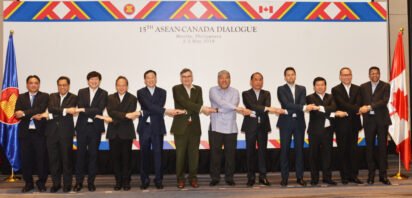
Canada's position as a middle power places it in a unique situation where it must carefully navigate its relationships with major global players. Recent developments have highlighted the need for Canada to reassess its strategies, especially as global economic interdependencies evolve into more competitive and sometimes adversarial relations.
Economic Interdependence and Strategic Choices
Engaging with China offers significant economic benefits. As a leader in global manufacturing and clean energy supply chains, China provides Canada with access to critical minerals and technology sectors essential for future growth.
Conversely, Taiwan's technological prowess, particularly in the semiconductor industry, presents a valuable partnership opportunity for Canada. Taiwan dominates the production of high-end semiconductors, critical for advancements in artificial intelligence and defense systems.
The Strategic Tightrope 🎭
Balancing Act with Global Powers
For Canada, the challenge lies in creating a strategy that leverages these opportunities without alienating one side or the other. The United States, Canada's largest trading partner, continues to exert pressure for alignment, especially in light of recent trade policies and geopolitical shifts.
The Role of Value-Based Realism
Prime Minister Mark Carney's concept of "value-based realism" offers a potential framework for addressing this complex balance. This approach suggests that Canada should prioritize principled engagement, strengthening institutional ties while maintaining flexibility to adapt to changing circumstances.
Risks and Opportunities 🚀
Navigating Economic and Political Pressures
Canada's economic structure, heavily reliant on the US, complicates its ability to diversify. Recent US policy shifts have emphasized the need for Canada to explore alternative markets and reduce overdependence.
Meanwhile, China's view of Taiwan as a sovereignty issue adds another layer of complexity. Any deepening of unofficial ties with Taiwan could provoke diplomatic or economic pushback from Beijing.
Looking Ahead: Strategic Autonomy and Coalition Building 🔍
Building Resilience through Coalitions
As Canada seeks to establish strategic autonomy, it must prioritize building coalitions that diffuse bilateral pressures. This approach not only reduces vulnerability but also enhances Canada's standing as a middle power capable of influencing global norms and policies.
Conclusion: Navigating the Future
Canada's path forward requires a nuanced strategy that recognizes the limitations and opportunities of its middle-power status. By embracing value-based realism and fostering strategic autonomy through coalition building, Canada can better navigate its China-Taiwan dilemma, ensuring national prosperity and security.
The road ahead is fraught with challenges, but also rich with opportunities for those willing to adapt and innovate. As global dynamics continue to evolve, Canada's ability to balance its relationships with China and Taiwan will serve as a critical test of its diplomatic acumen and strategic foresight.
You May Also Like
Geopolitical Analysis
The Ticking Clock in West Azerbaijan: A Geopolitical Analysis
March 30, 2026
Geopolitical Analysis
Indonesia's Role in Global Power Dynamics
March 30, 2026
Geopolitical Analysis
Caracas Falls: Geo-Political Shifts Explained
March 30, 2026
Geopolitical Analysis
The Trump Corollary: Gunboat Diplomacy Resurfaces
March 30, 2026