Category:
Geopolitical AnalysisGeopolitics and Reform: Western Balkans' Struggle
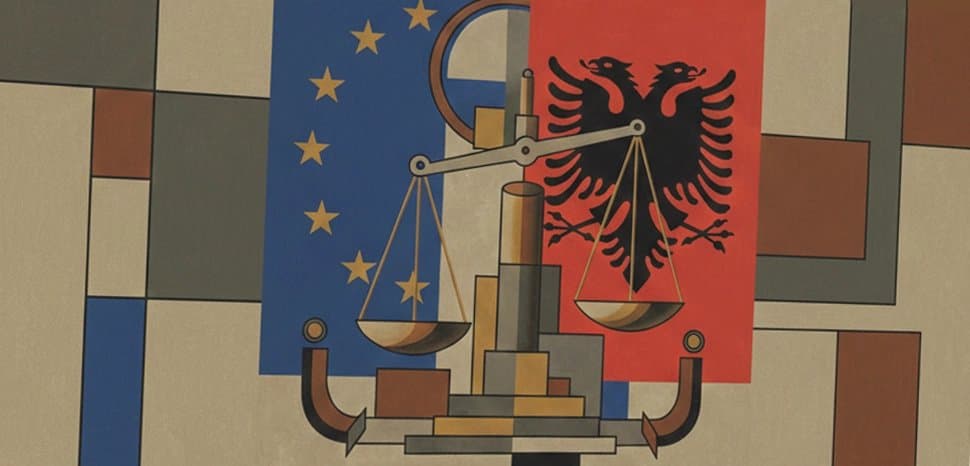
The Western Balkans, a region rich in cultural diversity and strategic importance, is at the heart of a geopolitical tug-of-war, where the forces of corruption and reform collide. This region, comprising countries like Albania, Montenegro, and Serbia, is under intense scrutiny from both the European Union (EU) and the United States (US) as they push for legal reforms aimed at enhancing democratic institutions. Yet, these efforts often face significant hurdles, revealing the complex interplay between global politics and local governance.
The Geopolitical Chessboard 🎯
The Western Balkans have long been a focal point for Western powers aiming to expand their influence in Europe. The EU and US have invested heavily in promoting democracy and legal reforms, viewing these nations as potential allies in a region that still bears the scars of past conflicts. However, the road to reform is fraught with challenges, as these countries struggle with political malpractice, institutional weaknesses, and pervasive corruption.

Institutional Weaknesses and Reform Challenges
Despite the positive rhetoric surrounding EU accession, many Balkan states find themselves caught in a cycle of superficial reforms. The pressure to conform to EU standards has led to an overemphasis on enforcement optics rather than the establishment of robust legal safeguards. This focus on appearances often results in hasty measures that undermine long-term stability and governance.
In countries like Montenegro and Albania, the pursuit of EU membership has prompted significant changes, but these have not always translated into meaningful progress. For instance, Montenegro's judicial reforms, outlined in their 2019-2022 strategy, have been criticized for their lack of impact, with reports highlighting political gridlock and insufficient judicial accountability.
The Role of External Influence 🔍
Both the EU and the US see immense economic and strategic potential in the Balkans. As NATO allies, Montenegro and Albania have been encouraged to align their legal systems with European standards. This alignment is seen as a pathway to prosperity and stability. However, the reality on the ground tells a more complex story.
Case Study: Albania's Judicial Reforms
Albania's attempts to overhaul its judiciary system, supported by the US and EU, illustrate the pitfalls of external intervention. The creation of the Special Structure against Corruption and Organized Crime (SPAK) was meant to tackle corruption but has faced accusations of overreach and bias. Critics argue that SPAK's actions are politically motivated, targeting opponents while ignoring more significant systemic issues.
This situation exemplifies how foreign-driven reforms can sometimes backfire, leading to a concentration of power and undermining democratic principles. The Venice Commission's calls for greater judicial independence highlight the ongoing struggle to balance reform with sovereignty.
Consequences of Reform Efforts ⚖️
The unintended consequences of these reforms are evident across the region. In Serbia, the withdrawal of USAID funding in 2025 prompted a crackdown on NGOs, showcasing how states might exploit reform narratives to consolidate power rather than enhance transparency.
Furthermore, the judicial systems in these countries often operate under significant political pressure, resulting in selective justice. The detention of notable figures, such as Albania's former President Ilir Meta, has sparked allegations of politicized prosecutions, further eroding public trust in the legal system.
Looking Forward: A Path to Genuine Reform
For the Western Balkans to achieve sustainable reform, there must be a shift in approach. External actors need to prioritize building resilient institutions over quick fixes. This involves fostering genuine dialogue and cooperation with local governments and civil society to ensure that reforms are not only adopted but also internalized.
Key Takeaways:
- The Western Balkans are at a critical juncture where external influence and local governance intersect.
- While EU and US efforts aim to promote democracy, they often result in unintended consequences, such as centralization of power and selective justice.
- Sustainable reform requires a focus on institutional resilience and local participation, rather than superficial compliance with external benchmarks.
As the Western Balkans continue to navigate these geopolitical challenges, the path forward must involve a balanced approach that respects both the aspirations of these nations and the realities of their political landscapes.
You May Also Like

Geopolitical Analysis
Global Alliances: The Decline and Its Implications
March 30, 2026

Geopolitical Analysis
Geopolitics Weekly: Greenland, US-Taiwan Deal, Syria
March 30, 2026
Geopolitical Analysis
Geopolitics Weekly: Key Global Tensions Unveiled
March 30, 2026
Geopolitical Analysis
Geopolitical Shifts: EU Minerals and Global Tensions
March 30, 2026