Category:
Geopolitical AnalysisGreat Power Rivalry in the Global Silver Market
In the global arena of geopolitics, few commodities play as intriguing a role as silver. Often overshadowed by its more glamorous cousin, gold, silver has emerged as a critical player in the ongoing power struggles between major nations. This precious metal, while valued for its aesthetic appeal, is increasingly recognized for its strategic importance in industrial applications and international relations.
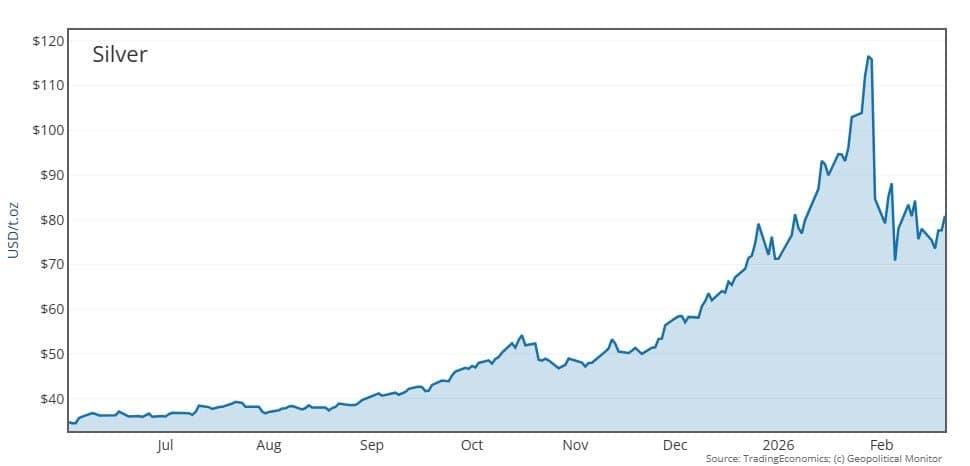
The Rise and Fall of Silver Prices
The year 2025 was a landmark period for silver, as it reached a record high of $121.88 per ounce. However, this peak was short-lived. A dramatic 28% plunge followed the nomination of Kevin Warsh as the Federal Reserve Chair, highlighting the volatility that characterizes this market. While Warsh's nomination was a key trigger, deeper structural issues such as the fractured price discovery process between Western and Eastern markets, and escalating resource nationalism, played significant roles in this silver rout.

Silver's Dual Role: Industrial and Monetary
Silver serves a dual purpose, acting both as a store of value akin to gold and as a crucial industrial input. In 2024, industrial use consumed a record 680.5 million ounces, driven by the burgeoning demand in sectors such as solar photovoltaics, electronics, and electric vehicles. This dual demand makes silver uniquely sensitive to both monetary policies and manufacturing cycles, distinguishing it from gold, which sees less than 10% of its demand from industrial uses.
Market Dynamics and Volatility
The silver market, valued at approximately $25 to $30 billion annually, is a fraction of gold’s market size, yet it experiences volatility two to three times greater. This volatility is partly due to the gold-to-silver ratio, which soared to 105.85:1 in April 2025, well above the historical benchmark of 67:1. Such high ratios often indicate undervaluation of silver, prompting rallies as observed in late 2025.
Mining and Supply Challenges
Unlike gold, silver is predominantly mined as a byproduct of other metals like lead-zinc, copper, and gold. This means that silver's supply is less responsive to its price and more dependent on the economics of the primary metal being extracted. Consequently, even as silver prices fluctuate, production rates are more influenced by trends in these primary metals.
Mexico's Dominance and Future Prospects
Mexico stands as the world’s leading silver producer, accounting for 23 to 25% of global mine output. This dominance is attributed to its rich ore deposits and efficient mining operations. However, without new discoveries, Mexico's reserves are depleting, posing challenges for future supply stability. As Mexico's role diminishes, attention shifts to mines where silver is a byproduct, underscoring the need for new sources to meet global demand.
The Geopolitical Implications
The global silver market is not immune to geopolitical tensions, particularly the US-China rivalry over critical minerals. Silver's strategic importance is underscored by its inclusion in this competition, as both nations vie for dominance in advanced technologies and renewable energies. Resource nationalism further complicates the market, as countries seek to control and capitalize on their natural resources more aggressively.
Conclusion: Navigating the Silver Storm
As we look to the future, the global silver market will continue to be shaped by a combination of geopolitical dynamics, industrial demand, and supply challenges. Investors and policymakers must navigate these turbulent waters with caution, leveraging insights into market trends and geopolitical developments to make informed decisions. The silver market, much like the metal itself, remains a versatile and dynamic player on the global stage, offering both risks and opportunities for those willing to engage with its complexities.
You May Also Like

Geopolitical Analysis
Geopolitics & Critical Minerals: New Mining Model
March 30, 2026
Geopolitical Analysis
Trump Tariffs Nullified: Global Impacts Unfold
March 30, 2026
Geopolitical Analysis
Water Security: Lessons from a Thirsty Planet
March 30, 2026
Geopolitical Analysis
EU's Defense Industry: The Key to Chip Sovereignty
March 30, 2026